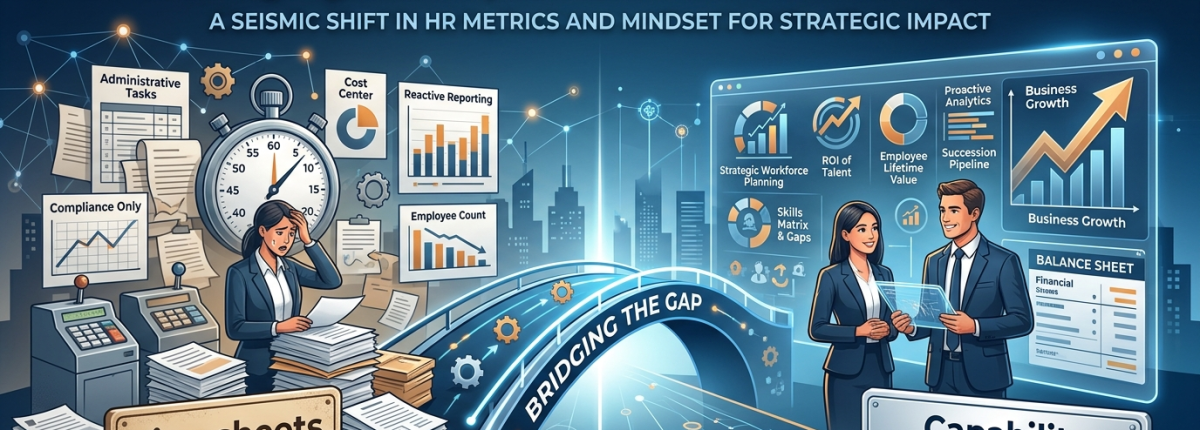
The distinction between an execution-focused HR Manager and a strategic HR Business Partner lies in how data is framed and communicated. To gain influence at the executive level, HR reporting must shift from activity-based metrics to business-impact insights.
1. From Cost Center to Value Driver: Measuring HR Through ROI
From a CEO’s perspective, every function is evaluated based on return on investment (ROI). HR reporting should therefore focus not only on costs, but on measurable outcomes.
Traditional HR reporting:- Recruitment expenses and employee benefit costs
Strategic HR reporting:- Revenue per Employee increased by 12% following workforce optimization
- Cost per Hire reduced by 15% through a shift from agency recruitment to employer branding initiatives
A professional HR report should clearly demonstrate the relationship between workforce investment and revenue performance. When personnel costs increase without corresponding revenue growth, it signals a productivity issue that HR should proactively address.
2. From Static Data to Strategic Forecasting
Turnover Rate is one of the most commonly reported HR metrics, but in isolation, it provides limited value.
Traditional HR reporting:- Quarterly turnover rate is 8%
Strategic HR reporting:- 60% of turnover occurs among key employees with over two years of tenure
- Primary cause: limited career progression opportunities
- Business risk: potential leadership gap impacting upcoming expansion projects
- Recommended action: implement internal mobility programs in the next quarter
Executives require forward-looking insights (foresight), not just historical data (hindsight). HR should identify patterns, assess risks, and provide actionable recommendations aligned with business strategy.
3. Process as a Means, Business Outcomes as the Goal
A common challenge in HR is overemphasizing program completion rather than business impact. Strategic reporting connects HR initiatives directly to operational and financial results.
| Function | Operational HR Reporting | Strategic HR Reporting |
|---|
| Training | 100% completion of sales training programs | Conversion rate increased from 10% to 14% post-training |
| Recruitment | 20 new workers hired | New hires reached 95% productivity within the first month |
| Culture | 90% participation in team-building activities | Employee engagement (eNPS) improved, reducing operational errors by 20% |
This approach ensures that HR initiatives are evaluated based on their contribution to organizational performance rather than activity volume.
4. Risk Management: Enabling Informed Executive Decisions
Effective executives rely on early warning systems to anticipate and mitigate risks. HR reporting should play a critical role in workforce risk management.Instead of focusing solely on compliance metrics, such as employment contract completion, HR should provide insights into market trends and talent risks.
Example:- Industry salary benchmarks have increased by 15%
- Maintaining current compensation structures may lead to significant talent attrition within six months
- Recommended solution: introduce flexible benefits programs to balance retention and cash flow optimization
By identifying and quantifying risks, HR enables leadership to make informed, proactive decisions.
HR reporting is not merely a collection of operational data; it is a strategic tool that reflects how human capital drives business performance. When HR aligns its metrics with financial outcomes, productivity, and long-term strategy, it strengthens its role as a key partner to the CEO. Organizations that successfully transform HR from an administrative function into a strategic driver gain a sustainable competitive advantage through stronger workforce capabilities and improved business outcomes.